Migrants of Ape in the Gasoline Crack of History
"Forget Mars rockets. Only a time machine will get us out of this now."
Somewhere in a Riyadh sitting room in 2004, a Saudi prince and a Bush family pollster worked out, over multiple finjans of black gahwa, that the American electorate’s memory is exactly ten months long. Not nine. Not eleven. Ten. Prince Bandar bin Sultan—nicknamed “Bandar Bush” on account of being closer to the Oval Office than most cabinet secretaries—had figured out that you don’t need to fix an economy; you just need to get it wobbling in the right direction. They all knew James Carville’s maxim—“It’s the economy, stupid.”
SUNY Professor Charles Hall laid the ground for Bandar’s number. Hall argued that a modern, high-GDP society with advanced healthcare, education, and art requires a high societal Energy Return ratio (EROI of roughly 10:1 or better). When energy prices spike or easy-to-reach fracked reserves deplete, a nation must spend a massive chunk of its GDP just to acquire more, starving the rest of the economy and risking recessions or stagnation. Folly would be to ignore a growing energy deficit while trying to build data centers and power up more air conditioners. Vaclav Smil suggests that steel, cement, ammonia (fertilizer), and plastics—which require cheap, massive quantities of fossil energy—are the first to fail. I would propose air travel. Robert Ayers and Eugene Odum would likely have said it is everything, all at once.
Bandar is the same man, we should remember, who, in the smoking rubble of September 11, got the no-fly order waived so a planeload of Saudi royals could catch a red-eye while the FDNY was still counting bodies. Access, it turns out, is a fungible commodity, and Bandar had more of it than the Secret Service. Who whispers in POTUS’s ear now? Do they ken EROI?
According to Woodward, in 2004, the taps opened, crude flowed, gas got cheap, Americans felt briefly prosperous, and George W. Bush got four more years to finish what he’d started. Well, not exactly, considering the Wall Street mess and wars that Obama inherited. But cause, meet effect. Effect, meet ballot box. Ballot box, meet 9-11, Iraq, and Margin Call.
Salting Away for a Rainy Day
In 1975, in the fevered afterglow of the Arab oil embargo, Gerald Ford signed off on the idea that America should keep a rainy-day fund of crude oil buried in salt caverns along the Gulf Coast—the Strategic Petroleum Reserve (SPR).
The SPR has been tapped exactly five times for real emergencies, and the shape of that list tells you everything about the trajectory we’re on. The first tap was Desert Storm, a minor 17 million barrels—10 percent at the time—to smooth over the defense of Kuwait. Then Katrina, then Libya, each toke a little bigger than the last, each a little more dizzying. In 2022, Genocide Joe Biden, worried about Ukraine, Nordstream, and Russian sanctions, sucked up 180 million barrels with a long straw. Jaws dropped. So did inflation.
Now in 2026, we’re already 172 million more barrels deep into an SPR deficit, and the depth meter is clicking still lower with each fighter jet launch from the USS Abraham Lincoln. This is the lowest the reserve has ever been. Gas prices did their obedient little dance—$2.81 in January, up to $4.48 by May, back down to $3.93 by July—because that’s what an SPR is for: not solving the problem, just anesthetizing the public long enough to get through the news cycle.
Except the anesthesia is running low. The Government Accountability Office—not known for excitable prose—reports that a significant part of what’s left in those salt caverns can’t actually be pulled out anymore. Forty years of use has degraded the salt to the point where the reserve has a floor, a hard stop, a place where “strategic” starts colliding with “geological.” We built a hedge against scarcity and then trimmed the hedge. There’s a word for that: “Covfefe.” Definition: saying something is so, magically makes it so. I liked Bush’s “Voodoo Economics” better. Republicans are just so gifted at framing.

The Slingshot Nobody Wants
The Energy Information Administration, doing its level best to sound neutral about the SPR unraveling, offers three scenarios for the back half of 2026. In the cheerful one, Kushner/Witkoff/Rubio step aside, reparations are promised, diplomacy breaks out, and crude eases back to $69–75 a barrel. In the middle one, the Hormuz standoff grinds on, insurance premiums stay nosebleed-high, and pump prices hold at the current miserable $4.10, don’t ask me why—I don’t work at EIA. And in the third one—the one where the diplomats give up and the reserve runs out of room to absorb more shock—the EIA’s chart goes vertical. Crude markets experience a sudden “slingshot,” forcing national average retail gasoline to break past previous highs. $7/gallon is not impossible. The U.S. economy falls into an inflationary recession.
I think Scenario 3 is a given. What effect this may have on the fall elections is unknown. We are well past 10 months before the midterms. Is Bandar’s Number still a thing? This is no longer 2004, or any of the election years prior. Social media-driven collective insanity (psychologists term it “mass formation”) drives Reality 2—the middle scenario—in which Trump is king for life.
My money’s on door number three. Whether Bandar’s Number still applies to an electorate marinating in algorithmically curated grievance is a separate and darker question. Ten months of gas prices used to move votes. Now we’ve got GOP candidates who seem to have found the override switch for collective sanity. The dashboard light that used to predict elections may simply not be wired to anything anymore.
Burroughs Had the Crack Figured Out
Beat poet, science fiction novelist William Burroughs, writing in the early sixties with an armful of heroin, called forth an image that sticks. In his Nova Trilogy, he wrote:
Cross wounded galaxies we intersect, poison of dead sun in your brain slowly fading – Migrants of ape in gasoline crack of history, explosive bio-advance out of space to neon…
He wasn’t writing about oil futures or neon-lit Blade Runner dystopias. The crack he was describing is the one we’re all standing in now, and it doesn’t care whether the trigger is a war, a drought, or a salt cavern with a hole in the bottom.
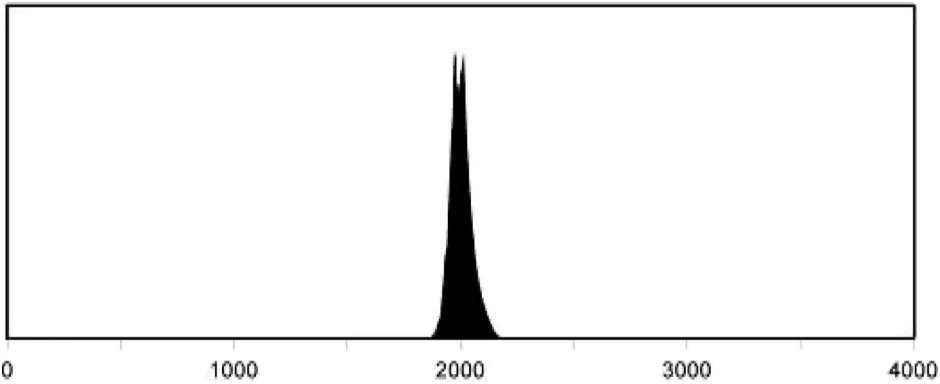
Our gasoline crack of history looks like this:
The greatest hits of every civilizational collapse (Tainter, Diamond, Catton, Mann… pick your favorite prophet) are:
Population well above historically stable levels
Political corruption and mindless intrigues
Too many farmers, too many crops, too much of the landscape employed in production—soil fertility crash
Deforestation and desertification
Climate change with extremes of regional weather pendula
Battered and diminished resilience to natural disasters
Increased migration/fighting in search of resources/safety
Disease and pestilence
“Human emissions are adding a permanent El Niño worth of heat to the climate system each decade.” — Zeke Hausfather
Time Machines and Painted Ponies
Let’s single out just one of those. The Washington Post, which has spent its Bezos years trying to remember what reporters were for, ran a feature August 13 comparing the onset of the super El Niño to a time machine. “At the high end of that range, global temperatures in 2027 would jump roughly 13 years ahead of the recent warming trend, reaching levels that might otherwise become typical around 2040. The low end would represent a 7-year-boost, to around 2034,” wrote reporter Ben Noll.
“These temperature increases will also have consequences for atmospheric water vapor. Because the water vapor-carrying capacity of air increases at a rate of 7 percent per degree Celsius, it’s possible—if not likely—that 2027 also sets a new global moisture record, surpassing 2024. In 2025, The Post mapped the planet’s rising moisture zones and showed how they are closely connected to an increasing risk for rainfall extremes.”

Pair a depleted strategic reserve with a climate system running years ahead of schedule, and you’ve got what a nuclear engineer would call a double fault—two independent failures stacking on top of each other in a system that was only ever designed to absorb one at a time. Down that road lies meltdown, or, in the industry’s gentler house language, “energetic disassembly.” I’ve always admired that phrase. It’s the kind of euphemism you reach for when the thing you’re describing is megadeath-scale.
You don’t need a crystal ball for any of this. You just need to read the gauges we’ve already built and notice that most of them are pointing the same direction at once. Where is your time machine parked, Jeff?
And the seasons they go round and round
And the painted ponies go up and down
We’re captive on the carousel of time
We can’t return, we can only look behind
From where we came….
— Joni Mitchell, The Circle Game, 1966
Thanks for reading The Great Change!

Meanwhile, let’s end these wars. We support peace in Iran, Lebanon, the West Bank and Gaza and the efforts to end the war in Ukraine immediately. Global Village Institute’s Peace Thru Permaculture initiative has sponsored the Green Kibbutz network in Israel and the Marda Permaculture Farm in the West Bank for over 30 years. With your assistance, it will continue to do so. We have a pipeline to aid in the West Bank that may only last a short time, so we appreciate immediate donations—right now
We support Ukrainian families seeking refuge in ecovillages and permaculture farms along the Green Road, and we work to heal collective trauma worldwide through the Pocket Project. You can read about it on the Global Village Institute website (GVI.cool). I appreciate your support.
Could you help me get my blog posted every week? All Patreon donations and subscriptions to Blogger, Substack, and Medium are welcome. You are how we make this happen. Your contributions can be made to Global Village Institute, a tax-deductible 501(c)(3) charity. PowerUp! Donors on Patreon get an autographed book off each first press run. Please help if you can.
#RestorationGeneration.

This post is public so feel free to share it.
We have a complete solution. We can restore whales to the ocean and bison to the plains. We can recover all the tremendous old-growth forests. We possess the knowledge and tools to rebuild savannah and wetland ecosystems. Coral reefs rebuilt with biorock build beaches faster than the seas are rising. It is not too late. All of these great works of nature are recoverable. We can have a human population sized to harmonize rather than destabilize. We can have an atmosphere that heats and cools just the right amount, is easy on our lungs and sweet to our nostrils with the scent of ten thousand flowers. All of that beckons. All of that is within reach.
 |
| We now have our own merchandise store on Redbubble. Swing on in for the latest wearables and chachkas…. |
Thanks for reading! Everything expressed in this article is my opinion.


Comments